Embarking on woodworking can appear daunting at the outset, with a dizzying array of tools, wood types, and methods to navigate. However, the good news is that you do not need an entire workshop or decades of expertise to dive in.
In this post, I will give you everything you need to get started woodworking.
Why You Should Learn Woodworking
Woodworking is more than a recreational pastime; it’s a practical skill that empowers you to build useful and gorgeous things.
Woodworking fosters patience, concentration, and the ability to solve problems. Furthermore, constructing something tangible, which can be put to use each day, is a rewarding experience.
Fundamental Woodworking Instruments
You can begin with a small number of tools, without investing in a full kit.
These are the essentials:
- Measuring Tape and Square: For precise measurement and accurate angles.
- Hand saw, circular saw: For cutting lumber.
- Hammer, power drill: For putting things together.
- Screwdrivers: For tightening and fastening screws.
- Sandpaper / power sander: For smoothing the wood.
- Clamps: For holding pieces together while working on them.
As your proficiency increases, you can begin expanding your kit.
Wood: The Main Component
The kind of wood you use is equally as crucial as the instruments you choose.
Softwood
Softwood species, such as pine, are ideal for novices because they are simple to cut and cheap.
Hardwood
Hardwoods such as oak and maple are harder to work with, though stronger and more long-lasting.
Plywood
Plywood is an excellent wood product for a wide range of uses.
Stick with softwoods for your first few projects to avoid the challenge of working with other wood products.
How to Set Up a Woodworking Space
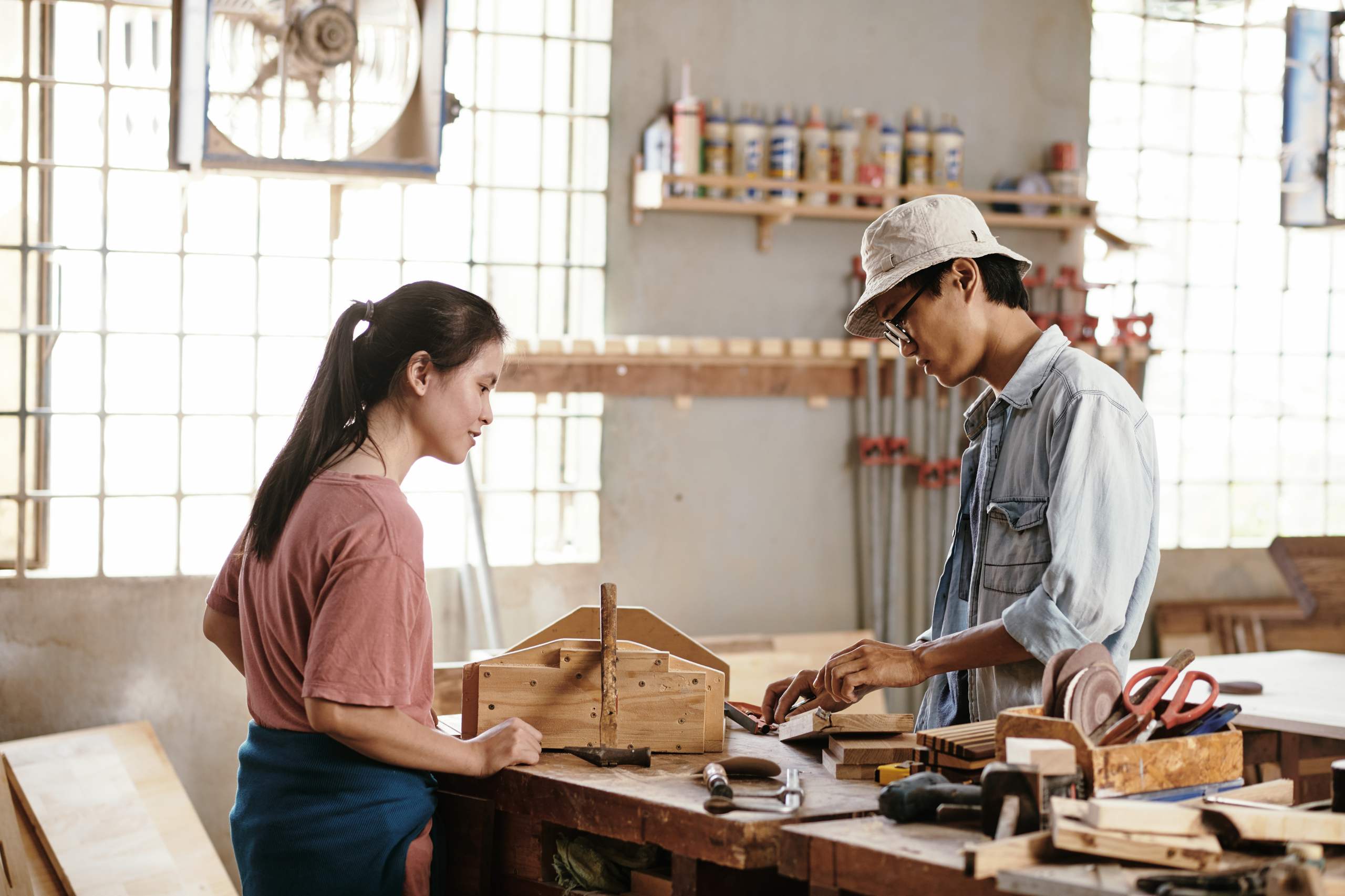
Setting up a full workshop isn’t a necessity to get started. All you need is a well-organized area.
Ensure that you have:
- A strong work surface
- A bright light source
- Plenty of room to work in a manner that is safe
- A ventilation system for your workspace
An organized, clean workspace increases both security and efficiency.
Easy Wood Projects for Beginners
You should avoid doing advanced woodworking projects in the beginning.
Good beginner woodworking projects include:
- A small shelf
- A wooden crate or box
- A stool
- A cabinet for the wall
These are great beginner woodworking projects that require fundamental abilities such as measuring and marking, cutting, assembling pieces, and finishing a surface.
How to Do Woodworking
You should first master these fundamental abilities.
Measuring and Marking
You must be exact when taking measurements, so make sure to write them down before you begin cutting.
Cutting
You’ll need to learn to cut accurately and in a straight line.
Joining
You can join items by screwing them together, nailing them together, or with a joinery method.
Sanding and Finishing
You’ll have to sand the surface and apply a stain or oil to the piece.
Mistakes to Avoid
You should avoid the following common beginner woodworking mistakes:
- Doing everything in a rush.
- Failing to accurately take measurements.
- Utilizing the wrong tool.
- Skipping sanding steps.
- Failing to plan ahead.
By knowing what to avoid, you will save yourself from unnecessary frustrations.
Improving Your Woodworking
If you want to improve at woodworking, keep practicing.
- Begin with small tasks and work your way up to more difficult ones.
- Repeat projects until you gain proficiency.
- Be open to learning from errors rather than trying to prevent them from happening.
- Attend to lessons that are easy to understand.
The more you practice, the more effortless it will become.
Conclusion
Woodworking is an endeavor, not a destination. You don’t have to be perfect to get started; you just have to get started.
You don’t need a well-stocked workshop to learn the basics; all you need are the tools, some softwood, and some determination to start building the projects you’ll enjoy.
Eventually, your abilities will develop, your self-assurance will grow, and you will not only be doing woodworking as a pastime, you will also have learned a new craft.